




Loving an avoidant husband can be confusing. He might pull away when things get close, then show up again wanting connection.
The best thing you can do is build trust slowly, communicate your needs clearly, and give him space—all while looking after your own emotional well-being.
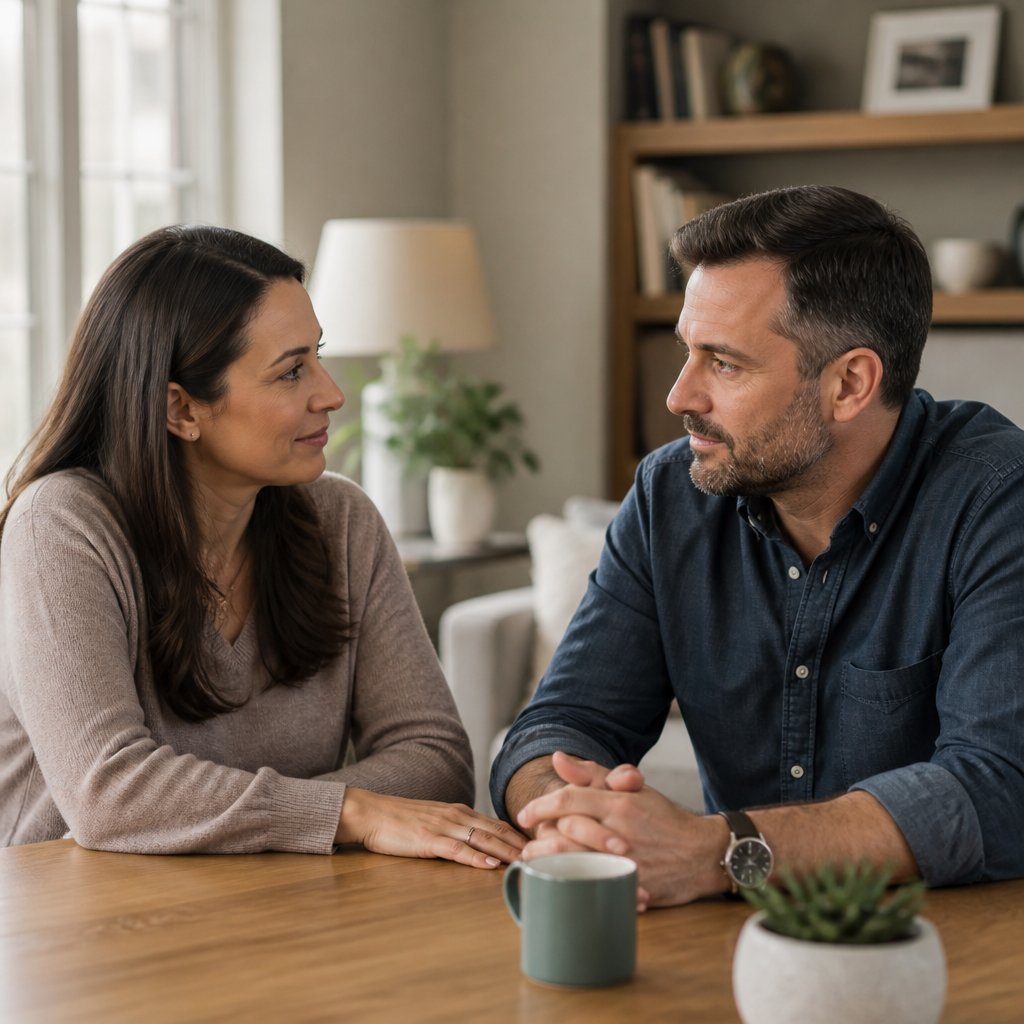
A relationship with an avoidant partner tends to follow a pattern. He moves closer, then steps back.
This isn’t always about you. Usually, it comes from how he learned to handle closeness earlier in life.
You can respond to this pattern in a way that supports both of you. That means understanding what drives his behavior, setting limits, and protecting your own needs along the way.
Key Takeaways
- His pulling away is usually a learned response, not proof he doesn’t care.
- Clear, calm communication works better than chasing or pointing out what he does wrong.
- Your own needs and support system matter just as much as his comfort.
Recognize Avoidant Attachment Without Diagnosing Him

You don’t need to be a therapist to notice patterns in your husband’s behavior. What helps is a clear idea of what avoidant attachment looks like, so you’re responding to what’s really happening.
Common Signs of Emotional Distance and Withdrawal
Avoidant attachment usually shows up as a repeating cycle. Your husband might seem close and engaged one week, then quiet and distant the next.
Look for these patterns:
- He goes quiet or busy after a moment of closeness
- He avoids deep conversations about feelings
- He changes the subject when the relationship comes up
- He seems more relaxed with distance than with intimacy
- He handles stress alone instead of turning to you
This isn’t random. In avoidant attachment, emotional withdrawal often follows a pursue-withdraw cycle, where closeness triggers distance.
If withdrawal consistently follows intimacy, that’s a pattern worth noticing.
Dismissive Avoidant vs. Fearful Avoidant Patterns
Not all avoidant behavior looks the same. Two subtypes fall under the avoidant attachment style, and knowing which one fits your husband changes how you respond.
Dismissive avoidants usually feel fine with distance. They often find requests for reassurance confusing.
Fearful avoidants want closeness, but they’re scared of it at the same time. This creates a push-pull dynamic: he moves toward you, then pulls back, then moves closer again.
Both types avoid deep intimacy, but they feel different to live with. Dismissive avoidants tend to be steady but distant. Fearful avoidants might be warmer but less predictable.
Why Independence Can Function as Self-Protection
Your husband’s independence probably isn’t about you. For many people with avoidant tendencies, self-sufficiency started early as a way to deal with unmet emotional needs.
If he couldn’t rely on others as a child, he learned to rely on himself. That habit sticks around.
It often shows up as trouble asking for help, discomfort with vulnerability, and a strong urge to solve problems alone.
This self-protection isn’t a flaw. It’s a learned response that once made sense. Understanding this can help you separate his emotional distance from your own value.
Understand What Drives the Push-Pull Cycle

The push-pull dynamic in your marriage didn’t start with you. It comes from patterns your husband learned long before, plus stress and old wounds that shape how he handles closeness today.
How Childhood Experiences and Caregivers Shape Attachment
Attachment theory says your husband’s early bonds with caregivers taught him what to expect from close relationships. If his caregivers were inconsistent or dismissive, he likely learned that needing people wasn’t safe.
That lesson doesn’t disappear with age. It shows up in adult relationships—including his marriage to you.
Closeness and discomfort can feel linked for him. When you get too close now, his body might react as if he’s still that child protecting himself from disappointment.
He’s not choosing to reject you. He’s repeating an old pattern.
The Roles of Stress, Anxiety, and Trauma
Stress makes avoidant behavior worse. When your husband feels overwhelmed at work or in life, he has less energy to handle emotional demands at home.
Trauma matters too. Experiences involving rejection or loss of control can teach someone to avoid vulnerability.
Anxiety often hides under his withdrawal, even if he doesn’t show it. He might worry about being judged, losing independence, failing to meet your expectations, or getting hurt if he opens up.
These fears build quietly. Over time, they push him toward distance.
How Anxious Attachment Can Escalate Relationship Dynamics
If you lean toward anxious attachment, your reactions can make the cycle worse. When your husband pulls away, you might seek more reassurance or ask more questions.
To him, this can feel like pressure. The result is a loop: you reach out, he retreats, and both of you feel alone.
Recognizing this pattern really matters. The anxious-avoidant push-pull trap often grows when both partners react from fear.
Your husband might struggle with vulnerability because it feels risky. Your need for closeness matters too.
Naming this dynamic is the first step toward changing it, instead of letting old fears run the show.
Build Trust and Emotional Safety at a Realistic Pace
Trust and emotional safety take time with an avoidant husband. You need patience and small, steady steps instead of fast progress or forced intimacy.
Make Room for Alone Time and Personal Space
Your husband’s need for space doesn’t mean he wants to leave. Alone time helps him recharge and process emotions in his own way.
Give him room without taking it personally. If you push for constant closeness, he’ll probably pull away even more.
Let him know it’s okay to spend time apart. You can still check in with short messages or small gestures.
This balance of space and connection builds trust. He learns that closeness doesn’t mean losing his independence.
Invite Vulnerability Instead of Demanding It
Avoidant husbands often find emotional vulnerability tough. If you demand that he open up, he might shut down faster.
Try to create a safe and supportive environment instead. Ask open questions, then give him time to answer.
Don’t push him to talk about feelings right away. Small, low-pressure conversations can lead to deeper sharing over time.
Show empathy when he does open up, even if it’s just a little. That helps him link vulnerability with safety, not criticism.
Recognize Practical Expressions of Care and Connection
Avoidant husbands often show love through actions, not words. He might fix something, run an errand, or handle a task without being asked.
These acts are his way of showing care. Notice and appreciate these gestures instead of expecting lots of verbal affirmations.
Physical affection—like a hand on your shoulder or a quick hug—can also be his way of connecting. Notice these small moments.
If you value his practical ways of showing love, you help build emotional availability. It respects his comfort zone while still growing intimacy.
Communicate Needs Clearly Without Chasing or Criticizing
How you talk to your husband matters more than how often you talk. Clear, calm words work better than pressure, guilt, or repeated questions.
Use Calm, Specific Requests and I Statements
Vague complaints push avoidant partners away. Name one specific need and use “I” statements.
Try, “I feel disconnected when we don’t talk before bed. Could we check in for five minutes each night?” instead of “You never talk to me.”
This style supports open communication. Keep your tone steady. Don’t pile on multiple issues at once.
Stick to one topic, one request, and one outcome. It’s easier for him to respond without feeling attacked.
Create Agreements for Space, Return, and Repair
Avoidant husbands need space to process emotions. Instead of chasing him, set clear agreements ahead of time.
Ask him how much time he usually needs and agree on a signal for reconnecting. It could be a text, a phrase, or simply sitting near you again.
Build in a repair step. After space is given, revisit the issue briefly and calmly.
This structure supports healthy boundaries and reduces anxiety for both of you. Clear agreements replace guesswork with predictability.
Handle Conflict and Stonewalling With Firm Respect
Stonewalling happens when your husband shuts down mid-conversation. Don’t raise your voice or demand an answer right away.
Instead, point out what you see: “I notice you’ve gone quiet. Let’s pause and come back in 20 minutes.” This respects his need for emotional regulation while keeping the conversation alive.
Avoid ultimatums or threats—they usually make things worse. Stay firm on your needs, but flexible on timing.
Compromise means finding a pace that works for both of you. If stonewalling happens often, consider outside emotional support from a counselor or therapist.
Protect Your Needs, Identity, and Support System
Loving an avoidant husband doesn’t mean giving up your own mental health, friendships, or sense of self. You need clear boundaries, steady self-care, and a fair way to track progress in your marriage.
Set Limits Around Chronic Disconnection
Healthy boundaries help protect your emotional well-being when your husband pulls away for long stretches. You can be patient, but you don’t have to accept silence or distance as the new normal.
Think about what you can and can’t live with. Maybe a few hours of alone time after an argument feels okay, but days of total silence? That’s a lot harder.
Let your husband know your limits in a straightforward, calm way. You might say, “I get that you need space, but I need us to talk within 24 hours.”
It’s not about controlling him. You’re just making sure your own needs get met so resentment doesn’t pile up.
If the disconnection drags on for weeks or more, getting support from a licensed counselor can help you both find a better way to communicate.
Practice Self-Care and Emotional Regulation
Your emotional health matters just as much as his. Taking care of yourself isn’t selfish—it helps you stay grounded and calm as a partner.
Simple daily habits can make a difference:
- Deep breathing when you’re stressed
- Mindfulness like a short meditation or even a quiet walk
- Regular exercise to burn off stress
- Journaling to keep track of your feelings
- Getting enough sleep so your mind stays clear
Self-awareness helps you notice when you’re feeling anxious or looking for too much reassurance. When you spot these patterns early, you can regulate your emotions instead of reacting out of fear or frustration.
Keep up with your own hobbies, friendships, and personal growth. Having a strong sense of self outside the marriage makes it easier to stay calm when your husband needs space.
Measure Mutual Effort Rather Than Potential
It’s tempting to focus on who your husband could become rather than what he actually does. That mindset can keep you stuck in an unbalanced relationship for a long time.
Try to pay attention to real actions over time. Ask yourself:
| Question | What to Look For |
|---|---|
| Is he making small efforts to connect? | Short conversations, physical touch, quality time |
| Does he apologize after withdrawing? | Acknowledgment, not just silence |
| Is he open to therapy or reading about attachment styles? | Willingness to learn and grow |
Both partners need to show effort for a relationship to feel secure. If you see steady, mutual growth, that’s a good sign you’re moving toward a healthier attachment style.
Lean on your support network—friends, family, maybe a therapist—for perspective. Sometimes it’s hard to see the relationship clearly from the inside.
Seek Help When the Relationship Cannot Progress Alone
Some patterns run too deep for just one person to fix. If your husband stays distant even after your efforts, professional support can help in ways that daily conversation just can’t.
When Individual Therapy May Help
Individual therapy gives your husband a private space to dig into the roots of his avoidant attachment style. A therapist can help him connect his current behavior to past experiences, often from childhood.
This process takes time. He might need a while to trust the therapist and open up about his fears.
You can also benefit from individual therapy. It’s a place to work through your own attachment needs and learn how to stay grounded when he pulls away, instead of seeing his distance as a personal rejection.
How Couples Therapy and Emotionally Focused Therapy Can Help
Couples therapy creates a safe space for both of you to talk with less blame and more clarity. A trained therapist can slow things down so you both actually hear each other.
Emotionally focused therapy (EFT) looks directly at attachment patterns. It helps partners recognize the emotional needs behind their actions, which can be a game changer if one of you leans avoidant.
This approach can help your husband identify and name emotions he usually keeps hidden. Over time, it can help you both build a stronger emotional connection instead of repeating old patterns.
Finding a therapist who understands attachment theory—couples counseling can address specific relationship patterns—often works better than trying to figure it out on your own.
Signs Professional Support or a Relationship Reassessment Is Needed
Certain signs mean it’s time to get outside help. Watch for these:
- Repeated shutdowns: He always ends emotional conversations before they go anywhere.
- No progress over time: Nothing changes after months of the same issues.
- Growing resentment: You feel more angry or hurt as time passes.
- Isolation: You feel alone in the relationship even when he’s right there.
- Avoidance of commitment: He won’t talk about the future or acknowledge problems.
If several of these sound familiar, it might be time to bring in professional guidance or think about whether the relationship can meet your needs. A healthy relationship doesn’t require perfection, but it does need some willingness to grow.
Frequently Asked Questions
Here are quick answers to common questions about loving a husband with an avoidant attachment style.
What are the signs that an avoidant husband loves you?
An avoidant husband often shows love through actions rather than words. He might fix things around the house, remember little details, or show up when it counts—even if he doesn’t say “I love you” much.
He might also give you space without you asking, which is his way of respecting your independence. Watch for consistency over time. Signs of love from an avoidant partner usually show up in quiet, steady ways, not grand gestures.
How should you communicate with an avoidant husband without pushing him away?
Keep your tone calm and try not to blame when you bring up problems. Use “I” statements instead of “you” statements to lower the chance he’ll feel attacked.
Timing matters, too. Bring up serious topics when you’re both relaxed, not in the heat of conflict. Practical scripts for talking to an avoidant partner can help you find the words without triggering withdrawal.
Why does an avoidant husband withdraw emotionally or sexually?
Withdrawal usually isn’t about you. It often comes from childhood, when relying on others felt risky, and that shapes how he handles closeness now.
He may pull back when he feels overwhelmed, pressured, or like his independence is threatened. This can affect both emotional conversations and physical intimacy, especially during stressful times.
How can you build trust and emotional intimacy with an avoidant spouse?
Trust builds slowly, through safe, repeated interactions. Accept him as he is instead of trying to change his personality, and let him know his feelings are valid—even when they’re different from yours.
Small, steady actions matter more than big declarations. Over time, steady support and patience can increase intimacy with an avoidant partner and help him feel secure enough to open up.
Should you give an avoidant husband space or reach out when he pulls away?
Space usually works better. Avoidant partners often need time alone to process their feelings, and pushing for immediate connection can make things worse.
You can offer space before he even asks. Saying something like “take some time for yourself, I’ll be here” can reduce any shame he feels about needing distance.
When should couples therapy be considered for an avoidant husband?
If you keep running into communication breakdowns, or if emotional distance is starting to affect your daily life together, it might be time to think about therapy.
A good therapist helps both of you understand attachment patterns that probably began long before you even met.
Therapy offers a neutral space where you can both express your needs, and things don’t have to spiral into conflict every time.
If you’ve already tried consistent effort and self-help strategies but nothing seems to change, reaching out for professional support just makes sense.